 Concord Conservatory of MusicConcord Conservatory of Music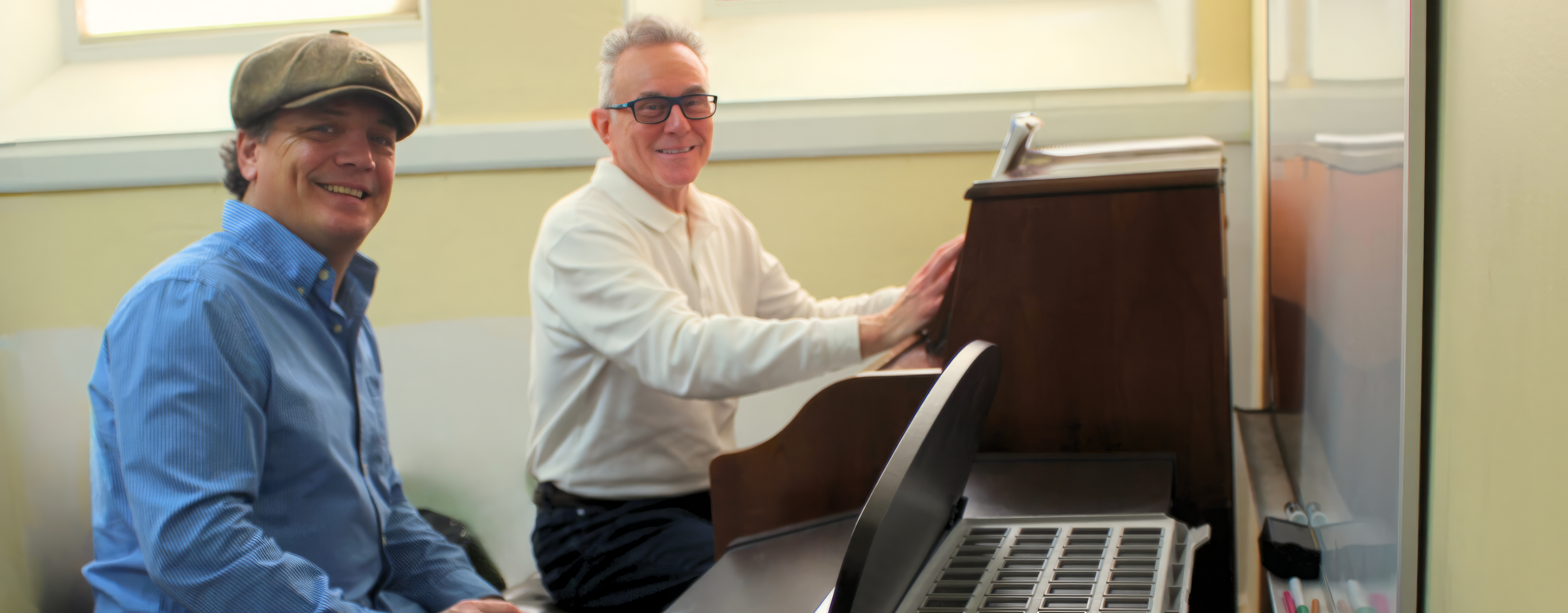
“Music,” says CCM percussion and piano instructor Brooke Sofferman, “is not actually a human creation. It existed way before we were here.”
As a performer, Brooke — an accomplished multi-instrumentalist — tries to tap into that ancient musical continuum and translate what he hears, and what he feels, for his audience. It never happens the same way twice.
He was thrilled to discover that teaching works the same way. Because no two students are alike in terms of aptitude, sensitivity, and experience, Brooke has to connect with each one on an individual basis. “Being a jazz musician, I’m always improvising,” he says. “Once I realized that teaching involved improvisation, too, I fell in love with it.”
First, Learn to Listen
Brooke learned to improvise before he’d even learned to play an instrument. Growing up in rural Colchester, Vermont, he spent a lot of time exploring the outdoors, making up his childhood as he went. “My mom would wake up in the morning and tell us, ‘Go out and play — see you at dinner,’” Brooke recalls.
Among the wonders of nature Brooke learned to appreciate was its intricate soundscape. “I didn’t realize it at the time, but I was building a musical foundation,” he says. “I was able to pick out certain rhythms and patterns in the sounds. Although it wasn’t human-made music, it gave me a lot of ideas that stayed with me.”
Brooke later found that his early ear training also worked in an urban environment. “Sometimes if I hear, say, a percussive kind of sound followed immediately by a horn, that might suggest a melodic idea that I can use to create something,” he says.
Getting Kids in Tune
Brooke teaches kids music as if he were teaching them a new language. And essentially, that’s what it is. Today’s world, with its many digital devices and distractions, makes it more challenging for kids to attune their ears in the organic way that Brooke learned. So, he starts with basic ear training, breaking the music down into a vocabulary of sounds and coaxing students to copy them.
Brooke is also an instructor in Basics of Music Theory, part of CCM’s Musician’s Toolbox series, which further emphasizes fundamentals. “You don’t need to know theory to play music,” Brooke says. “Just look at the Beatles — they couldn’t even read music. However, theory does explain why things sound a certain way. And it can aid your creative decisions by knowing what musical changes will shape your music. So music theory is extremely helpful in partnership with private lessons.”
In addition, Brooke says, “Music theory is an important tool for communicating with other musicians, which is the whole goal. By being able to communicate from a theoretical standpoint, you can be more efficient, and you and the other musicians can work together better. Imagine being able to speak a language, but having no idea what you are saying, or how to get your ideas across. It’s the same premise.”
Brooke thinks piano is the best instrument for teaching young students, both in the music theory workshops and in private lessons. “It’s laid out very clearly,” he says. “You can make adjustments easily.
Talent Isn’t Everything
It doesn’t take long to determine where each student stands in terms of talent, focus, and work ethic. And that’s when Brooke’s ability to improvise is a real asset. “We’ve all had teachers who just say, ’Do it my way or you’re not going to get it,’ ” he says. “But I see my job as adjusting my teaching style to help a particular kid.”
A student’s level of talent actually has very little influence on their ability to learn. In fact, the most talented students can be the toughest to teach. “With those kids, I not only have to come up with material that will challenge them, but I also have to find a way to inspire them to work on things that they’re not already good at,” Brooke says. “They don’t ever want to sound bad because they’ve always been told that they’re good. So they stick with what they know they’re good at. But the only way to get better is to focus on the things you’re not good at.”
Pass It On…
Brooke, who was a prodigy himself as a child (“I didn’t think I needed to practice”) was fortunate to have some good teachers along the way who knew how to push him beyond his comfort zone. But he also had “a fair number of not-so-great piano teachers.” He knows what a difference it can make when the right teacher connects with the right student at the right time.
Finding a way to make that connection is his goal. “You can’t always keep students interested over time,” he says, “but it’s a cool feeling when you succeed. It’s especially cool when a student can take all of those things that you’ve discovered and learned over all those years of playing and make them their own.”
Playing his Part
From his earliest call-and-response Yamaha training (“Brooke, Brooke, are you here?” “Yes, Mrs. Wigness, I am here”) right through his master’s program at the New England Conservatory of Music, Brooke has retained important lessons from his teachers.
One of those teachers was Richard Phelps, a private instructor he’d had growing up in Vermont. “He was the nicest guy,” Brooke says. “When I went to New England Conservatory, I sent him some albums I had put out. He sent back a note that said. ‘Wow, it’s so cool to see one of my students go above and beyond anywhere I’ve ever been. I hope you can pass that on to someone else someday.’
“That’s exactly what I’m hoping to do.”
Brooke Sofferman leads CCM’s Wednesday night Basics of Music Theory sessions, part of our Musician’s Toolbox series, through February 14.
CREATIVITY serves as a catalyst, encouraging musicians to explore new avenues by leveraging  their knowledge and emotions to interpret a composer’s piece or compose their own music.
On Saturday, January 27th, CCM offered an afternoon of creative exploration and expression. Attendees left the event buzzing with inspiration and a fresh understanding of their creative superpowers.
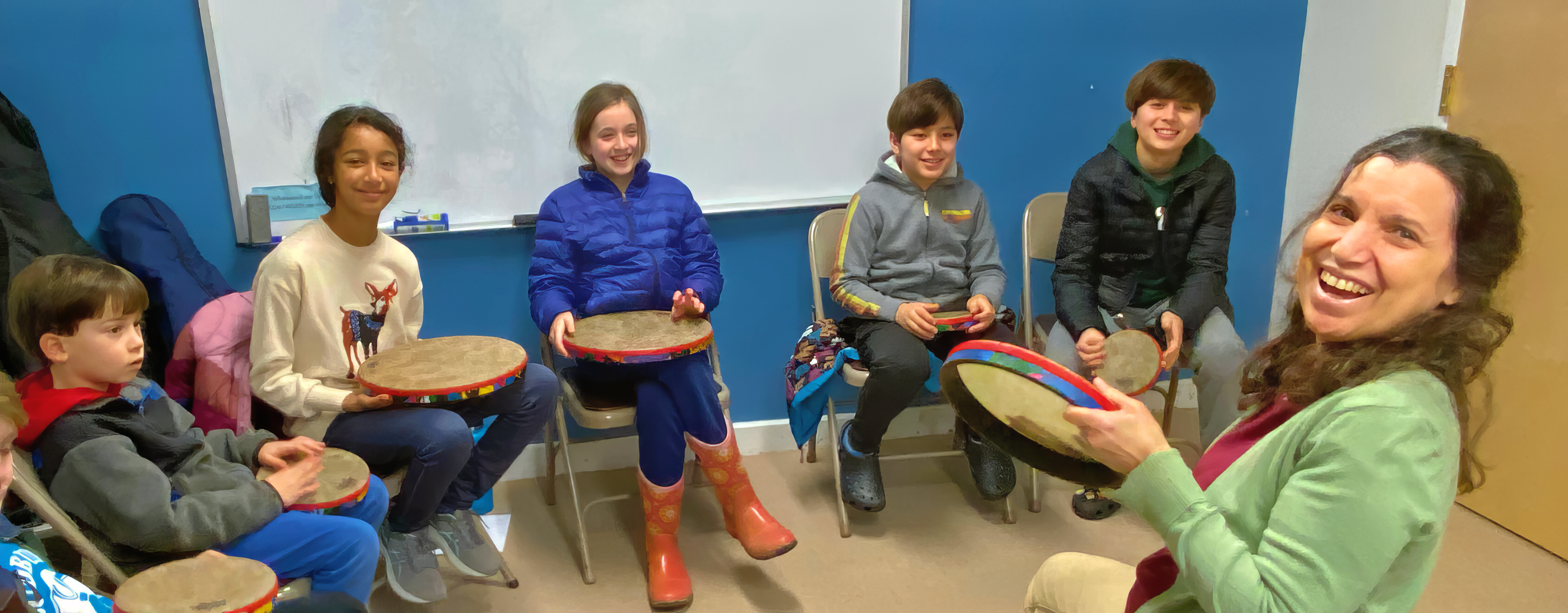
The Festival was a hub of exciting workshops tailored for both young and grown-up learners—from Fiddling Fun to Intro to Playing Jazz.
Our aim was all about boosting self-belief, sparking up creativity, and supercharging those critical thinking skills, entirely within a musical and supportive setting.
The CCM Creativity Festival gave students an opportunity to enhance their learning beyond private lessons—and of course, offered it complementary to all kid and adult students thanks to our generous donors.
How does music spark creativity and innovation?
How do composers utilize invention to craft fresh sounds and unique experiences?
We’ll explore these intriguing questions at CCM’s Music & Invention Concert and Lecture  featuring special guest presenter Tod Machover—who The Los Angeles Times calls, “Americas Most Wired Composer”!
Hear renowned composer, inventor, and educator Tod Machover of the MIT Media Lab explain the multi-faceted relationship between invention and music. From bow-and-string to new interactive interfaces and from AI to singalong, join us for a very unusual evening of sounds and ideas that will spark imaginations, open minds, and bring delight.
Plus, whether you are interested in classical, experimental, or electronic music, you will find something to appreciate and enjoy.
“I am very excited about helping to present this concert of remarkably diverse recent music – recent except for the Bach which always sounds stunningly fresh. Each piece explores a different aspect of invention, demonstrating that music is a perfect medium for showcasing new ideas whose impact goes way beyond sound. Besides the pleasure of working with such stellar performers on this program, I am especially glad that five of my outstanding graduate students from the MIT Media Lab will be participating as well. It should be an unusual and memorable evening, and I really hope that you can join us.”
Get your concert tickets in advance!
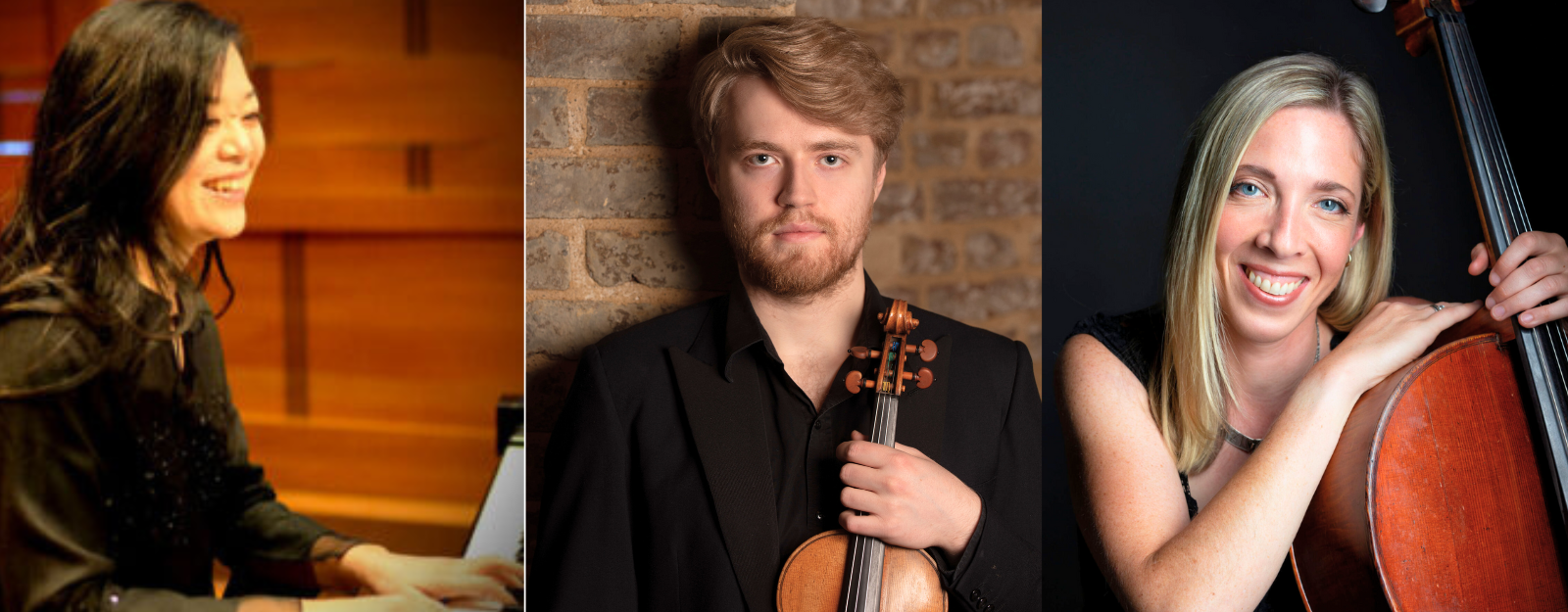
This event guarantees an exciting journey of music, featuring CCM faculty artist Yoko Hagino, alongside guest violinist Charlie Lovell-Jones, guest cellist Ariana Falk, as well as graduate students from the MIT Media Lab.
The 2023-2024 Concert & Lecture Series is made possible in part by our Lead sponsor, Emerson Health, and Supporting Sponsor Middlesex Savings Bank.
This program is supported in part by a grant from the Concord Cultural Council and Acton-Boxborough Cultural Council, local agencies which are supported by the Mass Cultural Council, a state agency.
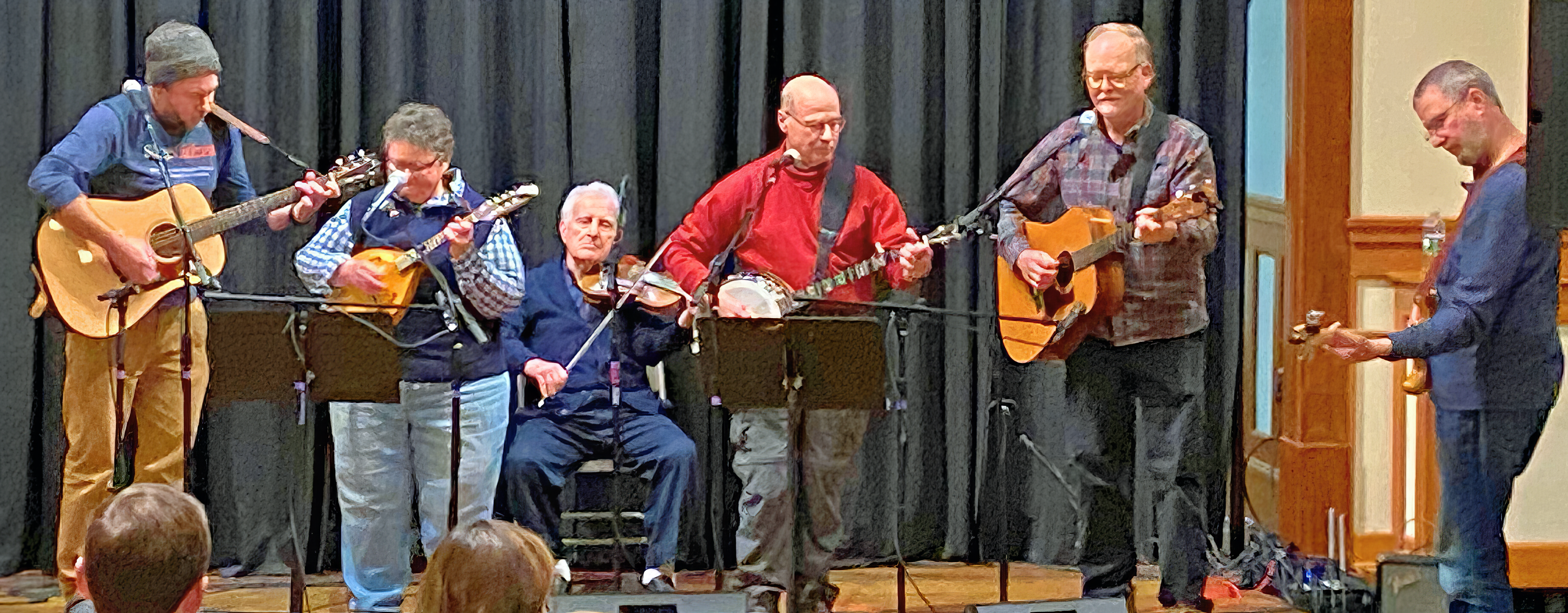
Enthusiastic bluegrass musicians recently gathered for the CCM Bluegrass Band Scramble, eager to immerse themselves in an afternoon of introducing bandmates to new songs, collaboration, and pure musical enjoyment. They formed bands, had a two-hour practice session with their new bandmates, named their bands and created their origin story. Each band took the stage in front of a live audience with a professional sound engineer and equipment for their performance.
There were no prizes at stake; instead, the focus was squarely on fostering a valuable musical experience and fostering camaraderie among musicians. This unique event provided a means for participants to connect with fellow musicians in their community, showcasing their individual skills while contributing to the collective harmony of the band. Beyond the thrill of performing live, participants relished the opportunity to share their passion for bluegrass music and revel in the joy of making music together.
